





1. The Basic Concept and Origin of SIM Cards
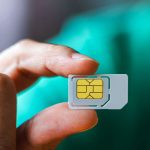
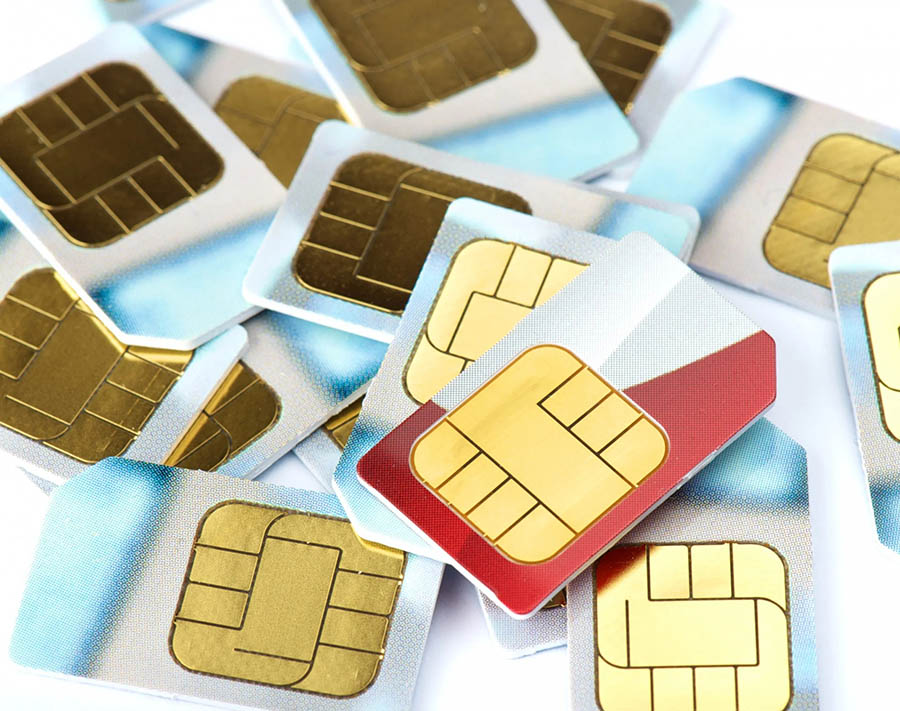
The SIM card, short for Subscriber Identity Module, is an indispensable component in mobile communications. It plays a crucial role in user identity authentication, data storage, and security protection. The advent of the SIM card addressed a fundamental issue in mobile networks: how to recognize and verify individual users, thus laying the groundwork for seamless mobile communication experiences.
Tracing back its origin to the 1980s, the early days of mobile telephony saw primitive methods for identity verification and information storage. Early mobile phones were tightly bound to the network, making it impossible for users to switch devices easily or retain their phone numbers. As mobile communication technology evolved, the SIM card emerged as a miniature chip card capable of independently storing and managing user information, fundamentally transforming the relationship between phones and networks.
2. The Technical Structure and Core Functions of SIM Cards
Understanding SIM cards requires an in-depth look at their internal structure. A SIM card consists primarily of a chip embedded in a plastic card. The chip houses a microprocessor, read-only memory (ROM), electrically erasable programmable read-only memory (EEPROM), and random access memory (RAM). These components work together to store and process data.
The microprocessor inside the chip runs programs responsible for user identity verification, encrypted communications, and network access. The ROM contains the SIM card’s operating system and permanent program codes. EEPROM stores user data such as phone numbers, text messages, and network authentication information, while RAM serves as temporary storage for data processing.
One of the most critical functions of a SIM card is storing the International Mobile Subscriber Identity (IMSI) and authentication keys. Each SIM card holds a unique IMSI, which identifies the user on the network. The authentication key, used alongside encryption algorithms, verifies the user’s legitimacy during network connection, ensuring communication security.
3. Classification and Size Evolution of SIM Cards
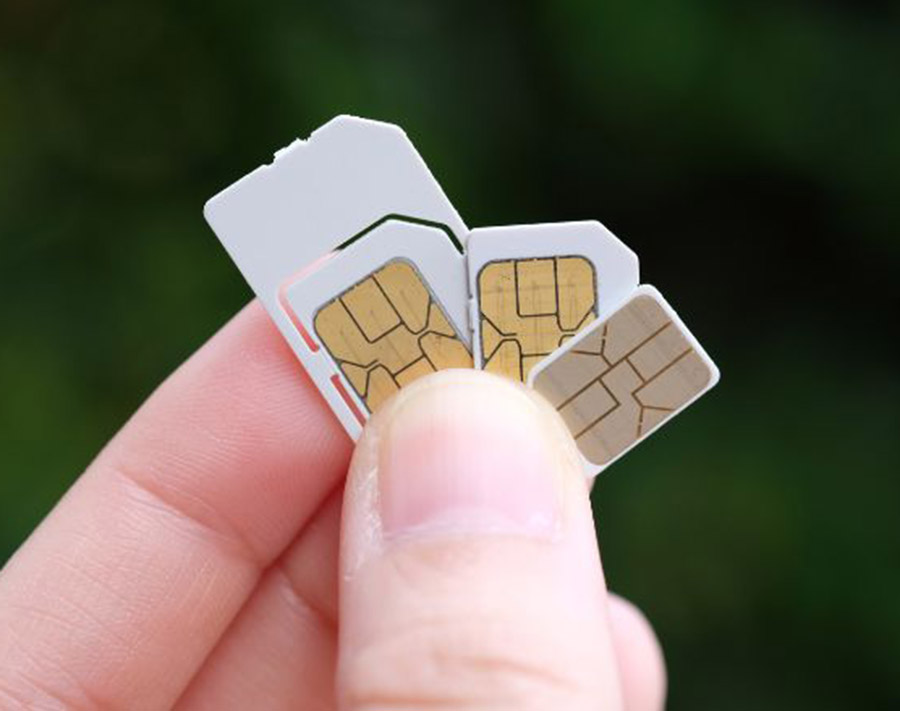
Since its inception, the physical form of SIM cards has evolved multiple times, adapting to the trend of increasingly smaller and more diverse mobile devices. The earliest SIM cards were large, known as full-size SIM cards, roughly the size of a credit card, which limited portability.
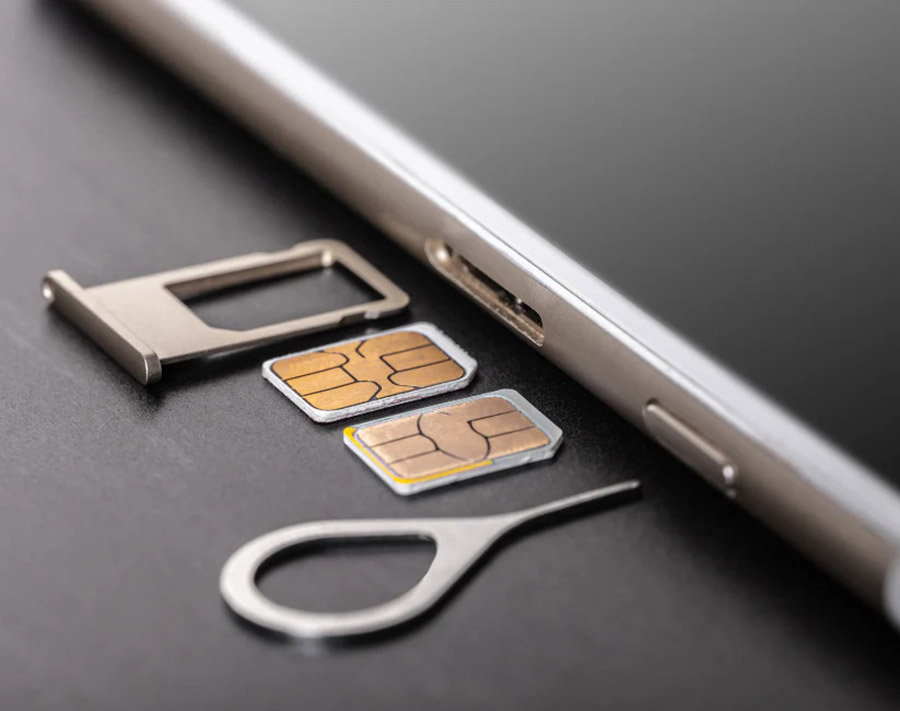
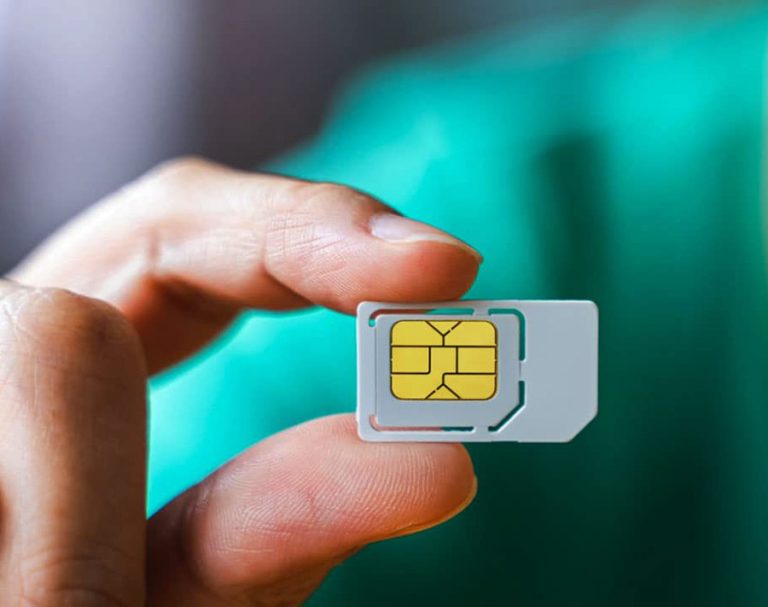
With technological advancements, the “standard SIM card” emerged, significantly smaller and becoming the mainstream choice for mobile phones. Later, with smartphones demanding ever more compact designs, the Micro SIM and Nano SIM sizes gained dominance. Micro SIMs measure about 15×12 mm with a thickness of 0.76 mm, while Nano SIMs are even smaller at 12.3×8.8 mm and thinner, making them the most widely used SIM card today.
Beyond size, SIM cards are categorized by type: physical SIM cards, embedded SIMs (eSIMs), and integrated SIMs (iSIMs). Physical SIM cards are traditional, removable cards that users insert into devices. eSIMs are virtual SIMs embedded within devices, allowing remote management of user profiles without a physical card. iSIMs go a step further, integrating SIM functionality directly into the device’s main chip for greater integration and flexibility.
4. The Role and Operation of SIM Cards in Mobile Networks
Within mobile networks, SIM cards serve as the key to identity recognition and secure authentication. When a phone powers on and attempts to connect, the SIM card initiates a communication process with the carrier’s base station for verification.
The process begins with the SIM card transmitting its IMSI to the network. The network responds by sending a random challenge number to the SIM card. Using the stored authentication key and encryption algorithms, the SIM card processes the challenge to generate a response code. This response is sent back to the network, which verifies it against expected results to confirm the SIM card’s legitimacy.
Once verified, an encrypted communication channel is established between the SIM card and the network, safeguarding subsequent calls and data transmissions. This mechanism not only ensures the uniqueness of the user’s identity but also prevents unauthorized access or spoofing, significantly enhancing communication security.
Additionally, SIM cards store network-related parameters and sometimes user contact information. While modern smartphones typically save contacts and messages in device memory or cloud storage, SIM-stored contacts still provide valuable backup and transfer functions.
5. Security Mechanisms and Privacy Protection of SIM Cards
Security is a cornerstone of SIM card functionality within mobile communication. SIM cards employ multiple layers of encryption and authentication to safeguard user communications and privacy.
The embedded keys in a SIM card are strictly confidential and never exposed externally. These keys are essential for generating authentication codes that allow only authorized users to access the network. The SIM card supports various encryption algorithms such as A3 and A8, used for authentication and session key generation, ensuring secure data exchanges.
Modern SIM cards also offer PIN (Personal Identification Number) protection, preventing unauthorized usage. Users can set a PIN code that must be entered upon device startup to unlock the SIM card. If the PIN is entered incorrectly multiple times, the SIM card locks itself, requiring a PUK (Personal Unblocking Key) to unlock, adding an extra security layer.
Manufacturers and carriers continuously enhance SIM card protections against hacking and malicious attacks. The latest eSIM technology, combined with secure elements, elevates security by enabling remote identity management while maintaining strict safeguards against unauthorized profile changes.
6. Expanding Applications of SIM Cards
Originally, SIM cards were used solely for authenticating mobile phone users and managing call data. However, their applications have since expanded into multiple sectors.
In the Internet of Things (IoT), SIM cards are crucial for enabling device connectivity and management. Smart homes, connected vehicles, remote monitoring systems, and other IoT devices rely on SIM cards for data communication and remote control. The proliferation of eSIM technology offers more flexible identity management options tailored for these applications.
SIM cards have also ventured into the payment industry. Some banking cards integrate SIM card technology to enable secure near-field communication (NFC) payments, enhancing transaction safety and convenience.
Enterprise-level SIM applications are growing as well, including corporate-specific communication SIMs and multi-user management SIMs, which optimize organizational communication workflows and security.
7. Integration of SIM Cards with Mobile Communication Technologies
The evolution of SIM cards has closely paralleled advances in mobile communication technologies. From 2G networks to 3G, then 4G LTE, and now 5G, the requirements and functions of SIM cards have continuously advanced.
In the 2G era, SIM cards handled basic identity authentication and call data management. The introduction of 3G and 4G demanded support for more complex authentication protocols and elevated security standards.
The arrival of 5G has further increased the importance of SIM cards. 5G networks require higher security and flexibility, accelerating the adoption of eSIM and iSIM technologies. Additionally, the ultra-fast speeds and low latency of 5G facilitate the broad deployment of SIM cards in IoT and smart devices.
Operators have upgraded SIM cards to support multi-network roaming and multi-frequency band access, enabling users to experience seamless global connectivity.
8. User Experience: SIM Card Replacement and Management
Users frequently face issues related to SIM card replacement, upgrading, and management. When switching phones or carriers, new SIM cards often need to be obtained or existing ones reactivated.
Traditional SIM card replacement requires physically swapping the card, which might involve visiting a carrier’s retail store or receiving a new card by mail. After insertion, users must activate the card and reconfigure network settings and stored contacts.
The rise of eSIM technology simplifies this process. Users can download SIM profiles remotely by scanning a QR code or through a carrier app, eliminating the need for physical cards. This method is faster, more convenient, and environmentally friendly by reducing plastic waste.
For frequent travelers, international roaming SIM cards or local temporary SIM cards provide communication flexibility and cost savings, allowing users to switch profiles easily while maintaining connectivity.
9. Market Status and Industry Trends of SIM Cards
The global SIM card market continues to expand alongside the proliferation of smartphones and mobile devices. While traditional physical SIM cards remain dominant, the growth rate of eSIM adoption is remarkable. eSIMs are becoming standard in premium smartphones, wearable devices, and IoT applications.
Carriers worldwide are actively building eSIM ecosystems that support remote activation and multi-profile management. The emergence of iSIM technology promises to further embed SIM functionality directly within device chips, freeing up space and reducing manufacturing costs.
Looking forward, SIM cards will increasingly emphasize enhanced security, ease of use, and multifunctional integration. Coupling SIM card technology with artificial intelligence and big data analytics may enable intelligent network management services and more personalized user experiences.
10. Tips for Selecting and Protecting SIM Cards
Choosing the right SIM card depends on device compatibility, network support, and intended use. It is crucial to confirm the phone’s supported SIM types to decide between physical SIM cards and eSIM profiles.
During use, proper care of SIM cards is important to avoid physical damage such as bending, scratching, or exposure to high temperatures. Enabling SIM card PIN protection can prevent unauthorized access. Regularly backing up important contacts and messages stored on the SIM card can prevent data loss.
Purchasing SIM cards from authorized and reputable sources helps avoid counterfeit or invalid cards. When using eSIMs, understanding carrier support and activation procedures ensures smooth deployment and usage.






+ There are no comments
Add yours